Zakat Management Software: Keeping Zakat Separate the Right Way
Learn how zakat management software keeps Zakat in a segregated, Shariah-compliant ledger — with receipts, donor history, and audit-ready reports for mosques.
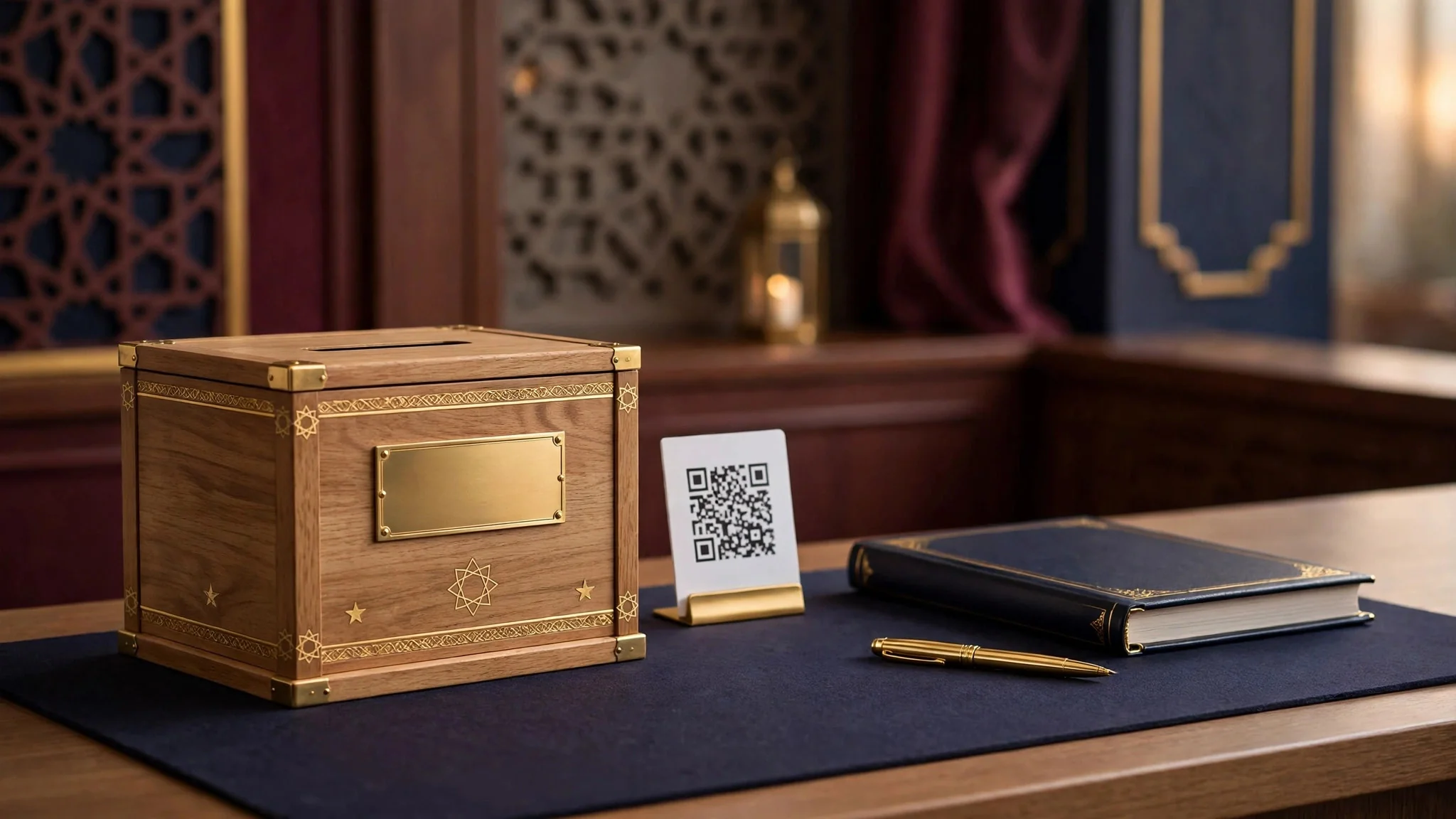
Zakat is not just another donation. It is a trust — an amanah — given for a specific purpose, to reach specific people, under specific rules. When a mosque receives Zakat, the committee must be able to show where it came from, where it went, and that it was never mixed with anything else. That is why more mosques use zakat management software: Zakat deserves a system designed for separation, traceability, and accountability.
Why Zakat Must Be Kept Separate
Not all mosque money carries the same obligations. General donations, Sadaqa, development funds, and Zakat may arrive in the same week, but they are not interchangeable.
Zakat is a restricted fund. It can only be used for eligible recipients, as defined by Islamic scholarship, and cannot be spent on general running costs, building work, or salaries simply because the money is available. Sadaqa is voluntary charity with far broader uses, and a general donation may support utilities or maintenance, depending on the donor's intention.
When these funds are mixed, even accidentally, it becomes hard to prove Zakat reached only eligible recipients, hard to answer a donor who asks, "What happened to my Zakat?", and hard to satisfy an auditor or a new committee.
Committees should consult their own scholars on eligibility, nisab, and distribution. Software can keep the records straight; it cannot replace scholarly guidance.
The Common Mistakes Committees Make
Most Zakat problems come not from bad intentions, but from systems not built for restricted funds.
Mixing Zakat with general Sadaqa. One cash tin, one bank account, and one "donations" column make it almost impossible to separate Zakat at month-end. Once mixed, money cannot be unmixed by memory alone.
No receipts, or receipts without a category. A donor gives Zakat in cash after Jumu'ah and receives a handwritten note — or nothing at all. Months later, neither donor nor treasurer can prove the amount, date, or that it was Zakat rather than Sadaqa.
Spreadsheet-only records. Spreadsheets depend on one person updating the right column with the right label. There is no automatic transaction log, no built-in separation between funds, and no easy handover when a treasurer steps down.
No disbursement record. Many mosques record Zakat coming in carefully, then record it going out vaguely — "distributed to needy families," with no date, amount, or approver noted.
No audit export. When an auditor asks for the books, the answer should not be a search through notebooks and messaging apps. If records cannot be exported cleanly and checked against bank statements, the mosque carries unnecessary risk.
What Good Zakat Management Software Should Do
Good software need not be complicated. It should do a few things reliably.
Separate, segregated ledgers. Can Zakat be held in its own ledger, separate from general donations, Sadaqa, and development funds? The software should make it hard to spend Zakat on the wrong thing, and show a separate Zakat balance at a glance.
Income tracking. Zakat arrives as cash, bank transfer, card, PayPal, and mobile wallet. Each payment should be recorded with date, amount, donor, and fund category.
Instant, branded receipts. Every Zakat donor should receive a receipt showing the payment was Zakat. A printable, downloadable PDF receipt protects both donor and mosque.
Donor history and recurring giving. Many people pay Zakat annually, sometimes in instalments. Software should keep donor history and support recurring donors and pledges, so payments are neither missed nor double-counted.
Categorised expenses and disbursement records. General funds need categorised expenses — utilities, Imam and Muezzin honorariums, maintenance, and events — while Zakat disbursements need their own separate trail.
Reporting and audit export. A committee should be able to report on Zakat alone, or all funds, for a specific period, without rebuilding data by hand. CSV and Excel export, plus a transaction log, turns a stressful audit into a routine check.
Language donors actually use. Support for English, Bengali, and Arabic, including Arabic with right-to-left (RTL) support, helps volunteers and donors use the system correctly.
How MinarOS Handles Zakat and Fitra
MinarOS is a Smart Mosque Operating System and Digital Signage platform. Its Finance & Accounting module uses categorised fund accounts, with Zakat and Fitra kept in segregated, Shariah-compliant ledgers, separate from general donations, Sadaqa, and development funds.
The module supports income and donation tracking across Cash, Bank Transfer, Card, PayPal, and Mobile Wallet; recurring donors and pledges; categorised expenses such as utilities, Imam and Muezzin honorariums, maintenance, and events; and invoice and receipt generation, with instant printable and downloadable branded PDF receipts. It also provides financial reporting, CSV and Excel export for audits, and transaction logs.
Learn more on the MinarOS Financial Services page, and see the wider platform on the MinarOS Services page.
Finance is in the Professional plan: $35/month monthly (USD), or $30/month billed annually ($360/year); £25/month monthly, or £22.50/month annual in GBP; ৳4,376.56/month monthly, or ৳3,751.34/month annual in BDT. The Free $0 plan does not include Finance. All paid plans include a 14-day money-back guarantee. Payments are accepted by Visa, Mastercard, AMEX, PayPal, Apple Pay, Google Pay, bKash, Nagad, CellFin, and IBBL. See the MinarOS Pricing page. MinarOS is available in English, Bengali, and Arabic with RTL support.
A Checklist Before Your Committee Chooses Software
Ask these together as a committee: Can we see a separate Zakat balance at any time? Does every Zakat donor receive a receipt that says "Zakat"? Can we record income and disbursements with a reviewable transaction log? Can we export Zakat records to CSV or Excel? Can we track recurring donors and pledges? Can volunteers use it in English, Bengali, or Arabic? And if the treasurer changes, can the new treasurer understand the records without an all-day handover?
If any answer is no, the tool may be a general donation tool, not a zakat management system. Agree in writing who can authorise a Zakat disbursement, who records it, and who reviews it. Start small: record new Zakat separately from day one. Try it first in the MinarOS demo, a live sandbox that resets every 30 minutes and needs no account. Demo figures are demo data only.
Frequently Asked Questions
What is zakat management software?
It is finance software that keeps Zakat in a segregated ledger, separate from general donations and Sadaqa. It records Zakat income, issues receipts, tracks donors and disbursements, and produces reports and audit exports.
Why can't Zakat just go in the general donation account?
Zakat is a restricted fund, usable only for eligible recipients, while general donations and Sadaqa can support wider mosque costs. Mixing them makes it difficult to prove Zakat was used correctly.
What is the difference between Zakat, Fitra, and Sadaqa in mosque accounts?
Zakat and Fitra are obligatory, with specific rules about who may receive them. Sadaqa is voluntary charity with broader uses. Record them in separate, categorised funds, and consult your scholars on eligibility.
What records should a mosque keep for Zakat?
Donor, date, amount, payment method, and fund category for every receipt; a receipt for the donor; a record of every disbursement, including date, amount, and authorisation; and a transaction log exportable for audit.
Can zakat management software calculate how much Zakat I owe?
No — this article gives no Zakat calculation rulings, and software is not a source of fatwa. Use it for record-keeping and governance, and consult a qualified scholar on calculation and eligibility.
Does MinarOS keep Zakat separate from other funds?
Yes. In MinarOS, Zakat and Fitra are kept in segregated, Shariah-compliant ledgers, separate from general donations, Sadaqa, and development funds. Finance also includes donation tracking, recurring donors, categorised expenses, branded PDF receipts, reporting, audit export, and transaction logs. It is in the Professional plan; the Free $0 plan does not include Finance.
Conclusion: Keep the Trust Visible
Zakat is given in trust. Honour it by keeping it separate, recording it carefully, and making the records easy to check: a segregated ledger, a receipt for every donor, a clear disbursement trail, and an export an auditor can use.
If your mosque still mixes Zakat with general donations, or relies on spreadsheets and memory, now is a good time to change. Explore the live sandbox at MinarOS Demo — no account needed, resetting every 30 minutes — then check the Professional plan and its 14-day money-back guarantee on the MinarOS Pricing page.